

In Summary
People in Suffolk shared opinions and experiences regarding smoking, vaping, and using tobacco. This report was created for Suffolk’s Public Health and Communities team to inform the development of tobacco control plans and strategies in Suffolk.
Inside the report
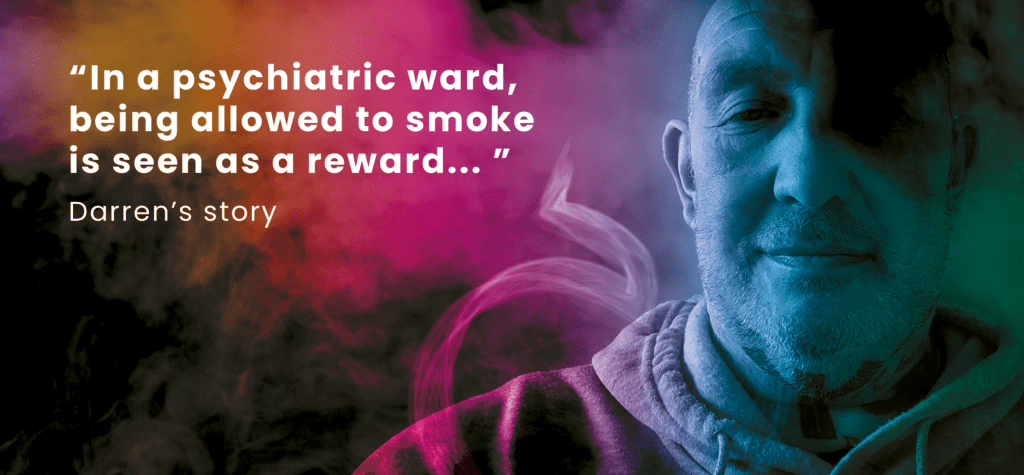
You can read a series of eight case studies about people’s stories of smoking, vaping or using tobacco. We also explore themes within more than 80 responses to a web form that was used to support the selection of case study participants.
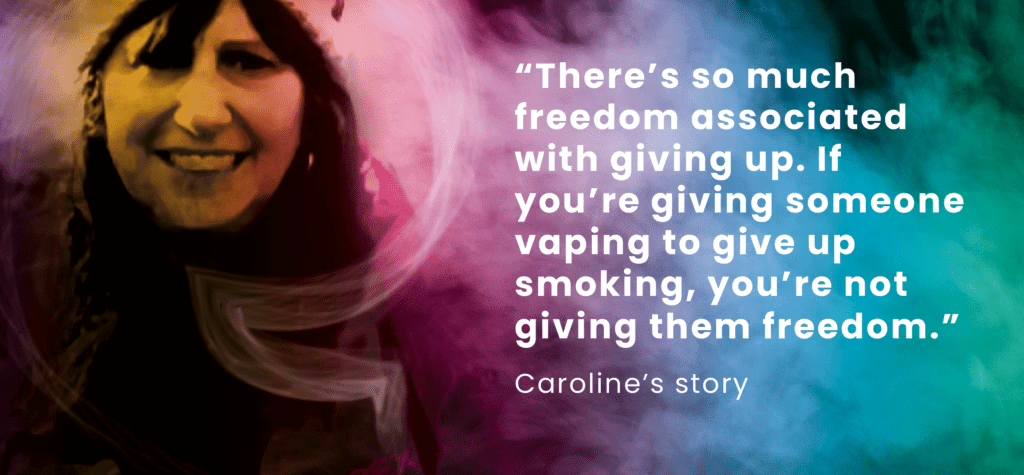
“We’re asking the right questions, but are we then making the right offers?”
The findings show individualised and varied approaches are needed to support and encourage people to stop.
- Many had turned to smoking to cope with stress in their lives, manage emotions, or just to allow them to take five minutes for themselves or take time away from a situation.
“I started using a vape to give up smoking and found this very effective… I think it provides a crutch for the everyday stresses of life. I have other coping mechanisms including exercise, but I still enjoy it and the ‘different’ social interactions it leads to standing outside offices and pubs.”
- People told us about how smoking had impacted their lives. This included the onset of poor health (such as a diagnosis of COPD), loss of loved ones through smoking-related disease, and impacts on overall fitness.
“My clothes smelt, my hair smelt, my breath smelt, my skin was bad and the amount I was spending on cigarettes and tobacco was insane.”
- Experiences and opinions regarding vaping were variable. Some had successfully quit smoking by vaping, whilst others had not. People expressed concern about the lesser-researched impact of vaping on health and many felt their dependency on vaping was higher than when they had smoked. Others considered it a ‘safer’ way to consume nicotine, and had felt better following a switch.
“Stopped smoking because it was affecting my lungs too much. I felt when I work out that I was getting out of breath too quickly so switched to vaping and feel better for that.”
- Most people who currently smoke said they wanted to quit or had tried to quit in the past. However, many found it extremely difficult to stop, despite most being aware of the risks or potential impact on their health. Other comments showed how people were conflicted between enjoyment of smoking and the potential for impact on their health or wellbeing.
“I enjoy it, but certainly am in no doubt about its dangers and would prefer to stop. It compartmentalises the day, and I enjoy the solitude, the break from routine. I know how bad it is for my health. I’m not sure I would be able to cope with strenuous cardiovascular exercise now – that should make me give up but hasn’t (yet).”
- The cost of smoking was mentioned by several respondents as a motivation for wanting to stop.
“I did not have enough money to eat and smoke, so I stopped smoking. The final straw for me was getting my bank card eaten by the ATM on my way home from uni at Christmas. My friend had to buy me some food and I felt so awful and annoyed at my life choices.”
How this report has been used
“Organisations eager to learn and apply health-based insight, should lean on the skill of the Knowing Works team in gaining a rich understanding of the health challenges residents face. It certainly helped us!”
Suffolk’s Public Health and Communities (PH&C) team told us:
- The work has supported a deeper understanding of smoking and vaping in Suffolk as well as drivers for quitting. It has informed the evidence base for the smoking and vaping health needs assessment for Suffolk.
- Suffolk’s County Council’s Behavioural Science Team used our research data from interviews and survey responses, to develop a ‘behavioural systems map’. This created a visual representation of the behavioural influences associated with smoking and vaping – a first for the Suffolk JSNA that could not have happened without our report.
A statement from the Behavioural Science Team in Suffolk’s Public Health and Communities Team said:
“The report by Knowing Works provided the raw data by which to understand the experiences of Suffolk residents’ smoking and vaping habits through a behavioural lens.
“Because of this work, the Behavioural Science Team in Suffolk’s Public Health and Communities were able to include a behavioural systems map into the smoking and vaping health needs assessment (HNA) – a first for the Suffolk JSNA. Illustrating the behavioural influences associated with smoking and vaping, via a map, better informs us on the factors we should be focusing on for intervention. Importantly, mapping behaviours that result in many health risks, such as smoking, heightens our ability to refine any intervention implementation that emerges from a HNA.
“In the same way that ‘great food requires fresh ingredients’, the Knowing Works report provided the active ingredients needed to enhance our own insight on a challenging topic – namely, smoking and vaping.”
Anna Crispe (Consultant in Public Health and Assistant Director, Knowledge, Intelligence & Evidence, Suffolk County Council) said:
“This incredibly detailed and insightful report has captured people’s experience of smoking and vaping in Suffolk in a new way. It is clear that a wide range of attitudes and views about smoking and vaping exist locally, many of which are complex, and that providing support to people to stop smoking, and in some cases to stop vaping, needs to carefully take account of these views. There is no one simple way to stop smoking, even when people are highly motivated to do so. Therefore, the ways in which we support people to stop smoking, in the interests of their own health and the health of those around them, need to reflect that.
“This research will be used extensively as we develop and adapt the support we are able to offer people to stop smoking in Suffolk over time. I would like to thank everyone who has so generously shared their knowledge and experience with us during the process of writing this report, and Healthwatch Suffolk for conducting the research and producing such a clear and engaging report.”
Could we support your next project? Please contact our team.
Please note, we use a third party service called Typeform to manage this form.