In Summary
Welcome to our page about the wellbeing of nearly 7,000 young people who took part in the My Health, Our Future survey in 2018. Discover what they told us in our summary below, or download our report for more detail and analysis.
Almost 7,000 students in eight schools across Suffolk were asked about their mental health and wellbeing.
Amongst the important issues they highlighted were self-harm, cyber-bullying, sleep problems and difficulties in finding the right support to help them cope.
The report was commissioned through the Suffolk Children’s Emotional Wellbeing Group as part of work to deliver Suffolk’s Emotional Wellbeing Transformation Plan (EWB2020) at the time – a requirement by the Government at the time.
This was the second report in our now extensive series of insights published across the My Health, Our Future programme.
Read some key findings
“They have groups about me on Snapchat”.
- 15 per cent of young people reported that they had previously self-harmed. Of these, three quarters were female. Forty per cent indicated they did not know where to go for support.
- Almost one in ten young people (eight per cent) said they had been a victim of cyber-bullying in the last two months.
- The number of young people who said they got less than six hours of sleep on a school night increased with age – from one in ten at age 11 to six in ten at age 16. Thirteen per cent said they went to sleep after midnight on a school night.
- Three out of five female students and one in four male students worried about their appearance and/or body image ‘most or all of the time’.
- One in three young women and just over one in ten young men rated their day-to-day self-esteem as either ‘poor’ or ‘very poor’
- Female students experienced poorer wellbeing with increasing age, falling below the national average after 15.
- Forty-five per cent of students did not consider they had been taught about mental health and wellbeing, increasing to 60% by 18.
- Accumulative school pressures (e.g. exams and revision) became an increasingly prominent source of stress in the lives of young people, with 85% identifying school-related factors as a “stressor” by the age of 17.
Expression through creativity
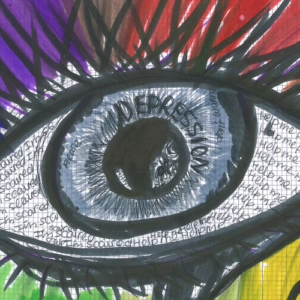
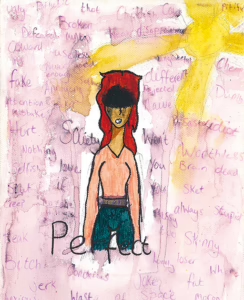
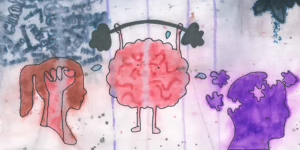
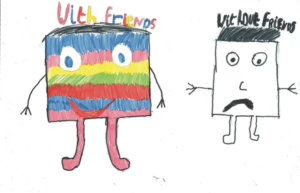
In addition to asking them to respond to questions, our programme also invited young people to express themselves (in MHoF phase two and three) by sharing interpretations of mental health and wellbeing in the form of artwork completed in school. They also recorded impactful and emotive comments about their experiences of mental health, body image, cyberbullying and low self-esteem.
A few examples are shown below, but you can find more in our full reports.