In Summary
The end of a person’s life is already a highly emotive time but, for many people, the additional worry about the COVID-19 pandemic made things much harder. This was particularly true of families that were prevented from spending final moments together because of the restrictions imposed by services.
This research supported the NHS and other services to consider the impact of the pandemic on end of life care and to improve standards of support.
Explore the impact
This report helped local NHS and other decision-makers in Suffolk and North East Essex to improve standards of local end of life care and support. For information about how they responded to this research, please visit www.knowingworks.co.uk/case-studies/eolreport/eoldreport-impact.
What people shared about their experiences
People shared deeply personal stories of loss they experienced at a challenging time for people locally, nationally, and internationally.
The impact of the pandemic
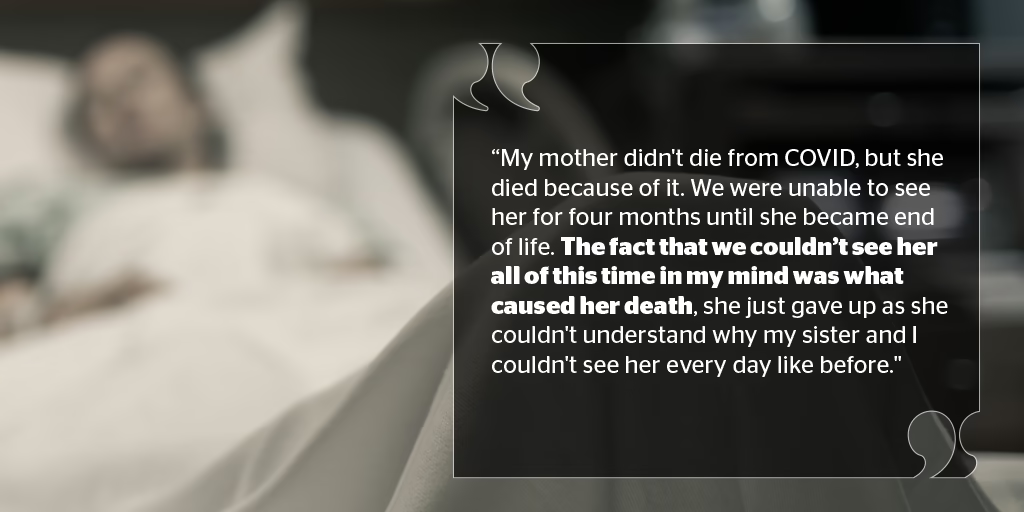
Service restrictions brought by the pandemic, whilst necessary, had undeniable consequences for the wellbeing of all involved in a person’s care. Although none of our respondent’s relatives had died directly from COVID-19, lockdown regulations had an impact on almost every experience shared with us.
“We were very much left to fend for ourselves. Getting him admitted to hospital was difficult even though he had sepsis. The last weeks of his life he had infections that required IV antibiotics, yet no one wanted to refer him to hospital. Looking back, it was so wrong…
- Some people felt that a lack of contact and social stimulation had accelerated a decline in their relative’s health and wellbeing in care homes.
- COVID had affected the support people could access in the community. This had caused enormous frustration and, for some, had led to delays in patients receiving vital medical treatment.
- People expressed anger at having missed quality time with their loved ones, guilt at having let their relative down when they needed them most, loneliness and isolation from their social networks during their bereavement.
Being given an end of life prognosis
Whilst survey respondents were generally positive about the way in which they and their relative had been given an end of life prognosis, around 10% were not satisfied. Feedback from interviews also highlighted variable experiences and this include that information was not communicated clearly enough, or delivered in a sensitive way, and that support was not offered at the time.
“…GP had been in and he said he had taken a turn for the worse. And that he didn’t expect him to live and I said ‘do I have time to get my daughter?’ and he said ‘I am not saying it’s imminent’. So I asked how long did he think, and he said ‘I never was much good at guessing when people were going to die’ and laughed… The girls at the home kept him going and after three weeks I got to speak to the doctor again and I said ‘you obviously haven’t been in to see [my husband] because you are not doing visits, but obviously he didn’t die.’ And again, he laughed and said, ‘I told you I wasn’t very good at guessing when people died. In fact, I feel an idiot.’ … My remark was ‘I am saying nothing doctor.’ and put the phone down…. I was upset because of his attitude.”
Planning for care at the end of life
- Those who had registered with My Care Wishes or My Care Choices were more likely to say their friend or relative had their faith and cultural wishes understood and supported, had preferences that were taken into account, were asked what was important to them, and were given adequate emotional support.
- Those whose friend or relative had told a professional of their wishes were more likely to say they had received help with symptom management ‘all of the time’, that they were involved in decisions ‘all of the time’ and that they were treated with dignity and respect ‘all of the time’.
These findings highlight the need to encourage those who are dying to have open conversations about their care wishes as early as possible. They also serve as a reminder about the importance of sharing end of life plans as broadly as possible so that everyone involved understands what is important to the patient.
Knowing what to expect
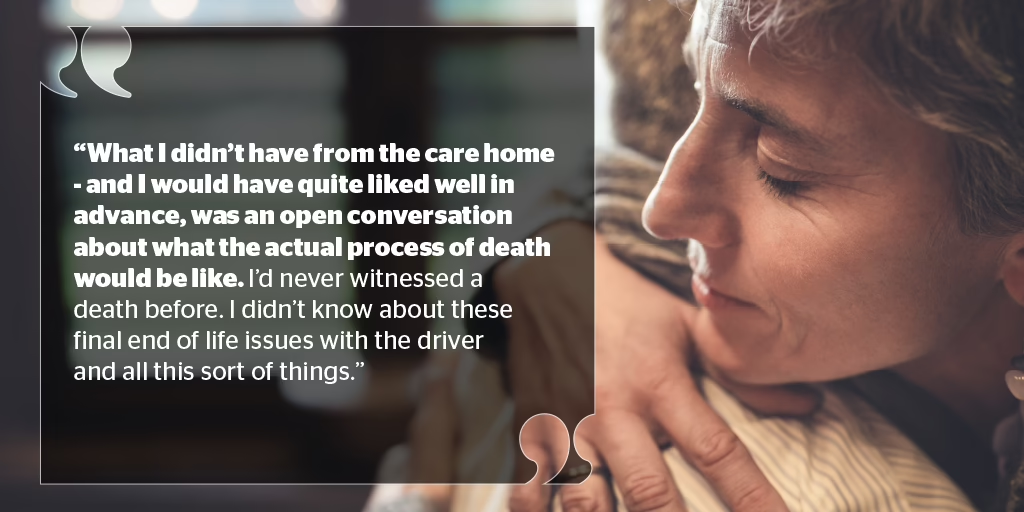
Some families felt there was a lack of information about what to expect at the end of life.
Respondents felt they would have been better prepared to deal with the practical and emotional aspects of seeing their loved one die if they had been better informed.
“I asked the hospice if there was a leaflet you could give to people to explain what would happen when they were dying because we would have wanted to know more about the terminal agitation. We knew it could happen but not in real detail. We feel we could not understand how a body could be so cold and still alive. It felt as if she had come out of a fridge and as if she was gone. It would have been really good to have had that knowledge…”
Experience of care and support
People were generally positive about the quality of the care their relative had received. However, people were more likely to say the practical aspects of care (such as being made comfortable) occurred ‘all of the time’, compared with emotional support.
- Those whose relative or friend died in a hospital were the least likely to say each aspect of care had occurred ‘all of the time’.
- Those whose relative died in a care home rated ‘awareness of cultural or faith wishes’, ‘being asked what was important’ and ‘being involved in decisions’ as least likely to occur ‘all of the time’.
- Those whose relative or friend died in a hospice were most likely to say they were asked about their preferences, what was important to them and were involved in decisions compared to those who died in other settings.
“He spent 23 days alone in hospital due to lockdown. As named next of kin, I was given information daily. It was hard to get through to the hospital to get that information. Because of a speech impediment, he was unable to communicate by phone – so, it meant I was asked to withdraw treatment without seeing him. I have to live with that. I finally got to say goodbye on the phone 30 minutes before he died, but I don’t know if he understood.”
Going the extra mile
We were able to identify positive examples of care, where it was clear staff had gone the extra mile to ensure people were well supported in difficult moments.
“The deputy manager who has responsibility for end of life care was superb. I mean, she was very clear and very, very helpful. Communicated well with us in those last few days. And I mean she loved my father to bits as well, and she made sure that the end of life care that he had was the best that they could possibly provide there.”
Access to support
Only around 50% of survey respondents agreed they had access to all of the support they needed, both at the time of death and in the last year or months prior to death.
When asked what support they would have liked, respondents mentioned things like having more support from GPs, better explanation about what to expect at end of life, access to specialist support and better joined up working across the system.
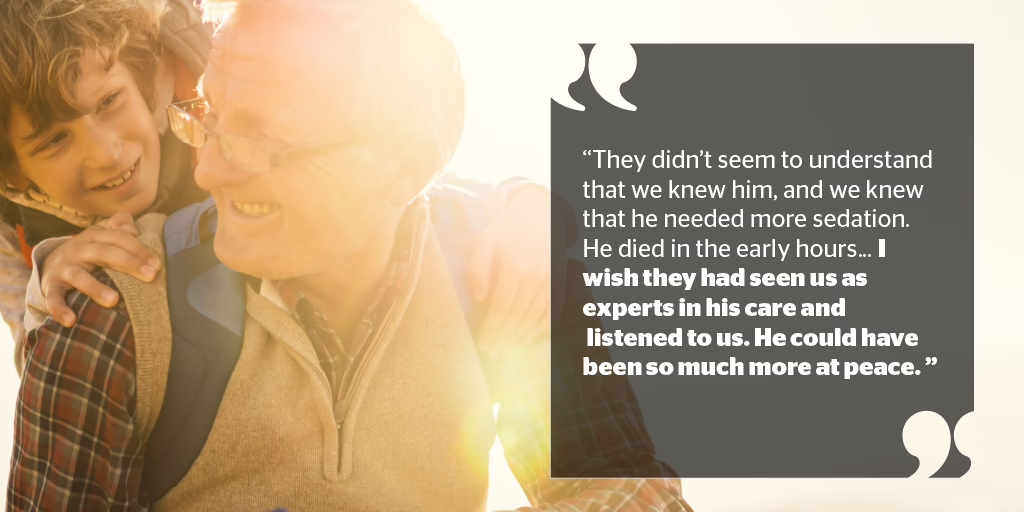
Our recommendations
We developed and agreed a set of recommendations with the leaders of local services. They focused on things like:
- Ensuring people have access to the information and tools they need to prepare for death.
- Exploring the opportunities that digital offers bring to helping people to access information about services and support.
- Helping people to understand more about what to expect when a person is at the end of their life (signs, symptoms and support).
- Improving communication and integration between the services providing support, and ensuring people know what to expect from each of them.
- Making sure people understand what they have been told about their prognosis.
- Ensuring that all conversations with professionals (at all levels within organisations) are compassionate.
- Ensuring people have the option of support from someone they know, or a professional, at key moments.
Please download our full report from this page for more detail.
If you think we can support your next project, please submit an enquiry.Can we help?