

In Summary
Our research for Suffolks Public Health and Communities team provided evidence of people’s attitudes toward living with Chronic Obstructive Pulmonary Disease (COPD) and experiences of support. The key learning has supported systems to consider people’s needs in the commissioning and design of local respiratory services and support.
Read on to learn more about what people told us.
Our learning summary
The key learning described below is based on the experiences of:
- 82 people who completed our short web form about their experiences.
- Twelve detailed case studies of people living with COPD in Suffolk.
In general, there was an inconsistent understanding about how people were supported to live with COPD and the resources or services available to provide help. Support in primary care varied from person-to-person, and people appeared to receive mixed messages about the support they could access (e.g., regarding how they can access pulmonary rehabilitation).
“Nobody has ever mentioned rehabilitation or anything I can do…”
Those who had attended pulmonary rehabilitation had found it an excellent source of information about the condition, but not everyone had engaged with the service or knew of its potential benefits.
More could be done to improve local awareness of pulmonary rehabilitation, and its potential benefits for people’s health. Those who had accessed the local service were very positive about how it had helped them to manage their condition and breathing. However, some people said they did not know about it at all (despite their diagnosis of COPD) or had been told they were ‘not bad enough’ to access the service.
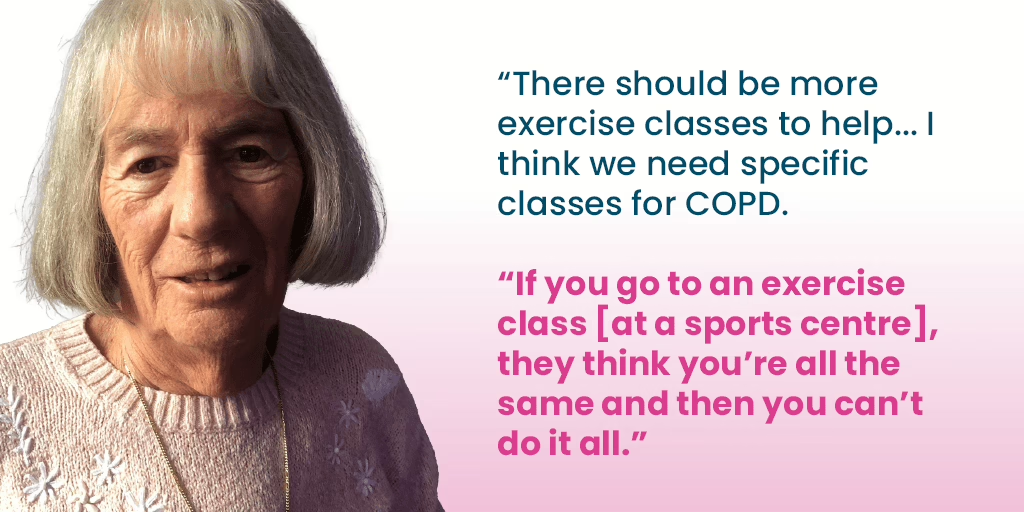
Broadly, people felt more information, signposting and tools could be offered to people living with COPD from the point of diagnosis and throughout the development of their condition. That included use of a consistent self-management tool that can help people to know more about how to stay as well as possible with COPD.
NICE guidelines recommend that all COPD patients should have an individualised self-management plan developed in collaboration between health care professionals, patients and their families or carers. Yet, only one interview respondent mentioned having one in place.
The development of better local resources would help people to manage transition and balance between clinical treatments and community-based self or supported care. Consideration should be given to developing a standard template for a COPD action plan locally that can be consistently made available to COPD patients and families.
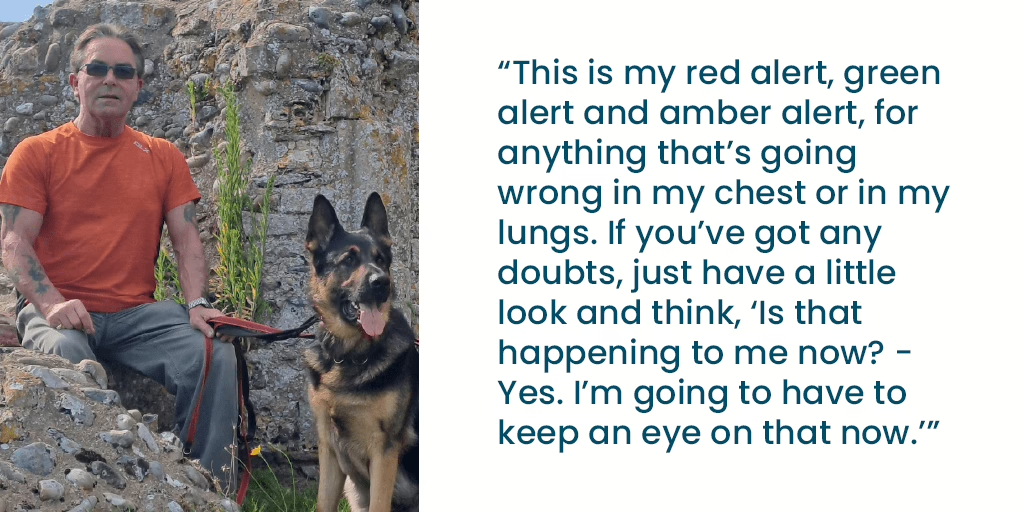
It was very clear that systems and services could benefit from helping friends and loved ones to know more about how they can support people living with COPD. We saw how the influence of others (or the absence of it) had a major influence on the likelihood that people would engage in healthy behaviours to manage their condition and adopt a positive mindset to the control they have over how it affected their lives.
For those who lack support networks, or who may be socially isolated, it is important for systems to consider how the positive influence of others may be replicated or encouraged.
This might include:
- Proactive signposting to sources of emotional wellbeing support and grass-roots support networks.
- Ensuring people can meet others with COPD by encouraging them to engage in existing groups, or to access other local groups and networks who can offer support (e.g., local singing groups or coffee mornings).
- Supporting people develop an emergency plan if they are on their own during a distressed breathing event.
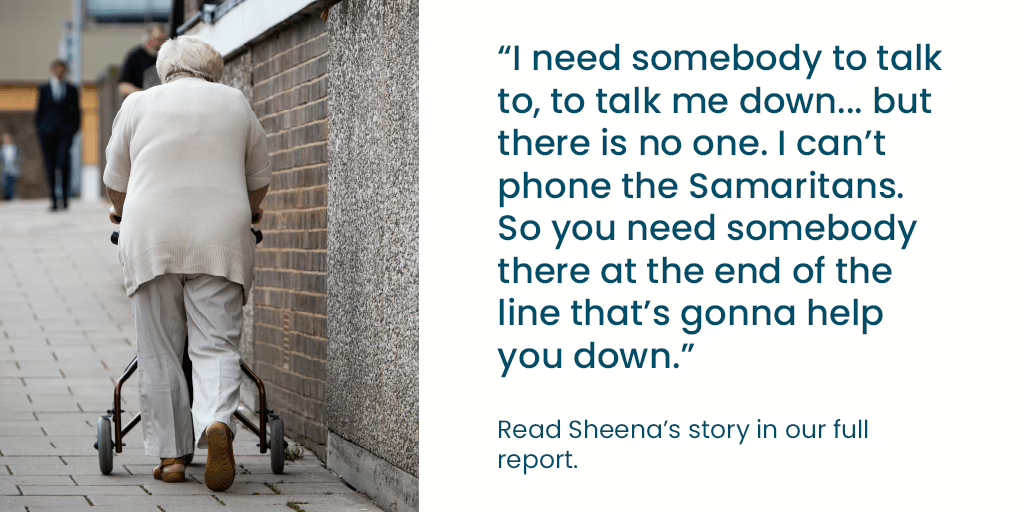
Social skills and confidence can also be a barrier to engagement in some types of support. Not every respondent said they wanted to attend a class in person, and some felt they would struggle with the social aspect of group support.
Mental health and wellbeing was also an important factor that influenced the way in which people approached the management of their COPD and responded to fluctuations in the severity of their symptoms. Helping people to know how they can manage their wellbeing and cope with the impacts of the disease must be an important element of any approach to encouraging self-management of COPD locally.
Influencing people’s attitudes is critical to encouraging better personal health management. Respondents who expressed a more ‘active’ attitude (i.e. they believed their actions could influence their health outcomes ) were more likely to:
- be engaged in exercise and other meaningful pursuits;
- have strong social networks of support;
- feel well supported by their health professionals;
- engage in positive behaviours to managing their COPD (e.g., healthy eating and weight management);
- have accessed clinical support services, such as pulmonary rehabilitation or rescue packs;
- have actively searched for information about their condition online.
Ultimately, people demonstrated a range of attitudes toward their health and COPD. Some were positive and motivated, whilst others were stoic or fearful about how it was affecting their lives. As such, systems and professionals need to adopt personalised approaches that help and encourage people to take control of their health, such as health coaching.
Find out what Vic told us about living with COPD in our full report and case study summaries. Get them here.
“COPD does not affect my everyday life because I will not let it”.