In Summary
We worked with NHS commissioners and local hospitals to explore people’s experiences of waiting for hospital care. The project has led to action in systems to improve people’s experiences.
This research was completed by our Healthwatch Suffolk service to shape and influence standards of local care and support.
This research has been helping health and care systems, leaders and services to explore people’s lived experiences of waiting for elective hospital treatment or care.
It followed research we completed in 2022 and means we have shared insights from more than 2,800 people waiting for hospital treatment.
What’s the impact?
This research has helped NHS decision-makers to develop an action plan to improve people’s experiences of waiting for hospital care. That includes specific action to prevent both physical and psychological harms people told us they have experienced.
Explore more in our dedicated case study at www.knowingworks.co.uk/case-studies/electivereport/elective-impact.
Key learning from this research
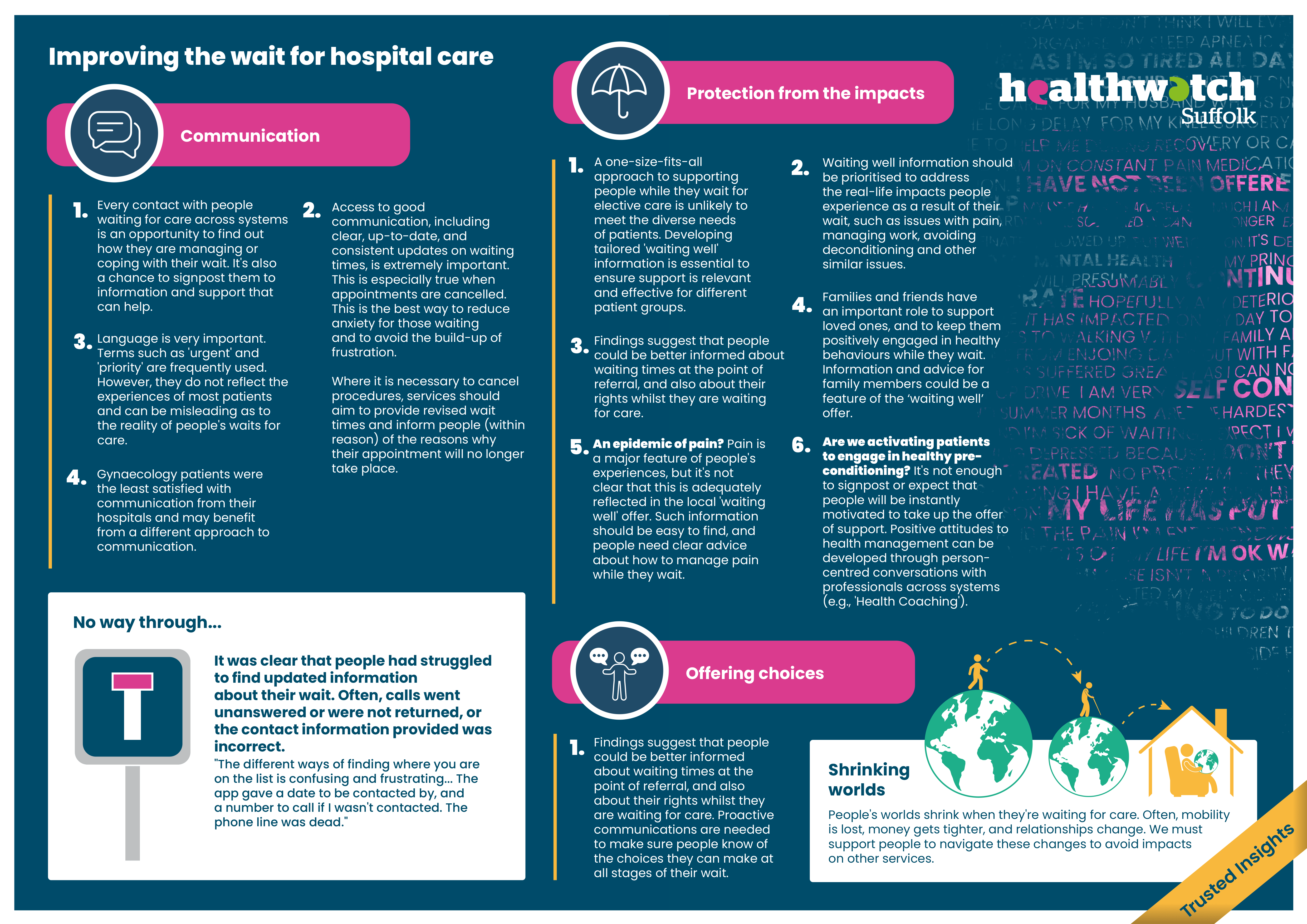
Our report features key learning from people’s experiences for systems, services, and decision-makers. Download our poster below for the key highlights or download our full report for more detail.
What people told us
Some key findings from this research
- People who had waited the longest reported more impacts on their lives.
- Patients waiting for gynaecology were amongst the most likely to be impacted by a longer wait for treatment.
- Two-thirds did not know how long their wait for care would be, and three in five people were not satisfied with communications about their wait.
- Almost three-quarters of gynaecology and ear, nose and throat patients said waiting had impacted their mental health and wellbeing.
- People with vulnerabilities (such as mental health difficulties, caring responsibilities, or disabilities) reported longer average waits for treatment.
- Many people felt they had not been supported to make lifestyle changes before their surgery.
People told us about the impact of their wait for care
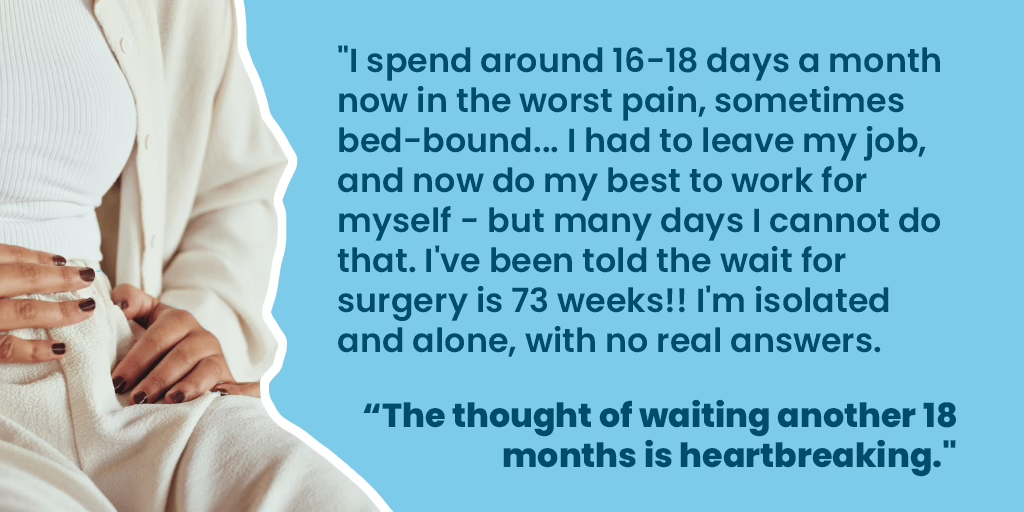
“The worst thing is coping with the pain…”
A third of people described how pain was having an impact on their lives in their comments. For some, the pain had been debilitating and unmanageable.
This key finding suggests people could benefit from having access to more resources related to coping with pain, which are currently not easy to find within the local ‘waiting well’ offer.
“I am 80 years old, and this is making me feel very sad and alienated.”
Comments highlighted how the wait for care was affecting people’s mood and mental health. The world appears to shrink for many people waiting for treatment as they struggle to maintain social events and become increasingly isolated through immobility, and sometimes embarrassment or shame of their condition.
“My lack of mobility made my caring duties more difficult when he needed me most. It has made me more depressed.”
Elective care delays appear to affect people with ‘vulnerabilities’ more, and that includes people with family caring responsibilities. Elective care delays are simultaneously creating family carers (as people draw upon the support of their family to cope) and disabling existing carers struggling to maintain their caring responsibilities.
“The different ways of finding where you are on the list is confusing and frustrating.”
It was clear that many people had struggled to find updated information about their wait. Often, calls went unanswered or were not returned, or the contact information provided was incorrect.
In general, communication remains a key issue for many people. Some commented positively about the interaction they had with professionals and services. Others had struggled to find answers to their queries or felt entirely dismissed by services.
“I’m out of work at the moment… Asking my family to help with my bills.”
Many people described how their wait for care had affected their work and finances. Coupled with increased costs to manage conditions (e.g., incontinence pads and mobility aids), this was becoming a significant strain for some.
Could we support your next project? Please contact our team.
Please note, we use a third party service called Typeform to manage this form.