

In Summary
Welcome to our page about the wellbeing of almost 5,000 young people who took part in the My Health, Our Future survey in 2022. Discover what they told us in our summary below, or download our report for more detail and analysis.
Read a summary of key findings
Nearly 4,900 young people took part in our survey about their wellbeing.
In 2022, the wellbeing of young people in Suffolk remained lower than in previous years of the survey. However, wellbeing had not fallen further than in 2021. This suggested young were starting to recover following the negative impact of changes brought by COVID-19.
Other key findings in 2022 included:
- Nearly a third felt cheerful rarely or ‘none of the time’.
- Two in five young people reported ‘moderate’ to ‘severe’ levels of anxiety, and almost a quarter felt anxiety made things ‘extremely’, or ‘very’, difficult for them.
- Twenty per cent of young people felt loved ‘none of the time’, or ‘rarely’. Young people with lower wellbeing scores were much less likely to feel loved.
- A third of young people felt ‘optimistic’ about their future ‘all of the time’, or ‘often’.
- A quarter of young people had self-harmed. Half of the young people who reported current self-harm did not know where to find help, but awareness of support has improved generally.
Some groups continued to experience poorer wellbeing
The findings highlighted how some groups of young people were disproportionately affected by wellbeing concerns. For example, young people who did not identify with binary gender categories were amongst the most likely to have low wellbeing. Furthermore, 1,058 responses from LGBT*Q+ young people highlighted how they were much more likely to report low levels of resilience, higher levels of anxiety, and be more likely to report self-harm.
“I just wish my school could help those who have parents that dislike their children for their chosen gender and sexuality, and if my school notices people who are struggling with others who bully them for their life choices.”
Similar experiences were reported by young carers, young people living with disabilities, and young people with experience of being in care. These findings are consistent across multiple years of the MHoF survey.
Commenting on the findings at the time, Andy Fell (LGBT*Q+ Youth Development Worker for Outreach Youth) said:
“We welcome the opportunity that the MHoF survey provides young people, particularly LGBT*Q+ young people, to share their lived life experiences of growing up in the county. It is vital in understanding the challenges faced by local young LGBT*Q+ people, and other issues they care about.
“The increase in participants identifying their sexuality and/or gender identity should be welcome as we believe it shows growing confidence within the young LGBT*Q+ community to highlight their presence, and to challenge service providers to develop accessible, appropriate and representative services.
“We know that young LGBTQ+ people face disproportionate challenges, but the survey also shows how sending positive messages of LGBT*Q+ acceptance can lead to better outcomes for all young people.”
Isiah, 21, said:
“Growing up, lots of my LGBT*Q+ friends experience poor emotional wellbeing due to how they feel society expects them to be; by completing the survey, young LGBT*Q+ people are helping Suffolk become more inclusive”.
Were more young people being bullied?
The findings in 2022 revealed higher levels of reports of bullying compared to our findings in 2021, and other years of the survey. This included bullying online (up 6%) and in school (up 10%). Overall, 30% of young people said they had experienced a form of bullying at school, or outside of school, and 50% felt they had not received any help or support to make it stop.
Compared to their peers, young people who had been bullied were much more likely to have low wellbeing, moderate to severe anxiety levels, and low resilience. They were also three times as likely to say they currently self-harm.
Young people did not always feel supported by those around them
Commenting on our report in 2022, Wendy Herber (Independent Chair, Healthwatch Suffolk) said:
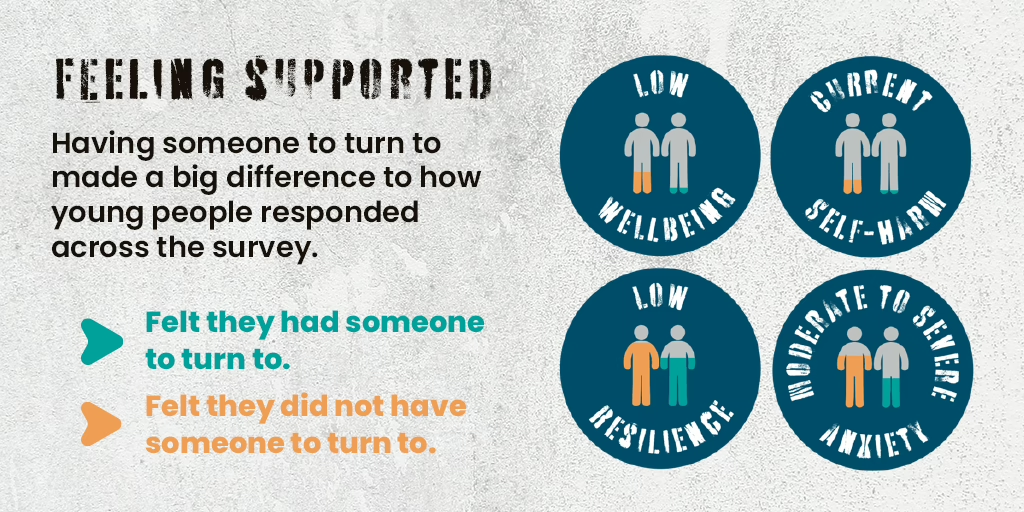
“Our findings show how important it is for young people to feel supported. We see in our results how those young people who felt they did not have someone to turn to about their wellbeing have experienced poorer outcomes across multiple measures in our survey. This is a finding of clear note for all that are a part of the lives of young people in Suffolk.
“Young people have told us how their wellbeing has been improved by the decisive action of others who have made themselves available to listen. From the teacher who has intervened when a young person has been bullied, to the doctor who takes the time to really listen to, and acknowledge, their concerns. There should not be a wrong door for young people who need support.
“We must take the time to continue to understand more about how we can foster the right support around our young people, and improve their wellbeing in years to come.”
Please download our reports for more detail about what young people told us in 2022.